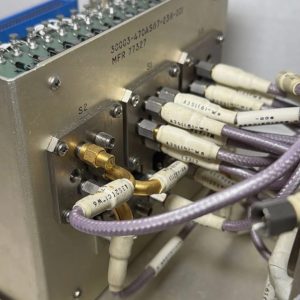
The Aviation Switching Module – NSN 4920-01-250-2696 (AS-IS / Untested) is a specialized aerospace electrical component offered for professional evaluation, restoration, testing, parts recovery, collection, or another suitable non-assumed application.
An Aircraft Switching Module may interact with test equipment, aircraft systems, electrical circuits, or support hardware, while an Aerospace Switching Module should not be energized without suitable technical information.
An Aircraft Electrical Switching Module can have commercial value for technicians, while an Aviation Electrical Control Module or Aerospace Electrical Control Unit requires qualified bench evaluation before operational consideration.
Accurate use of Aviation Control Module, Aircraft Electronic Switching System, Aerospace Switching Unit, and Aircraft Electrical Module terminology improves SEO without creating unsupported functional claims.
Identifying the Aerospace Switching Unit
A matching NSN can improve identification, but it does not establish present condition, functional status, completeness, or suitability for a particular aircraft or test system.
An identification plate should not be removed, repainted, altered, or covered because it may provide the strongest evidence of the component’s origin.
Evaluating Surplus Aircraft Electronics
The condition description should be understood as a limitation rather than a suggestion that the unit is probably operational.
A current-limited and controlled test setup may be appropriate when selected by qualified personnel.
Aircraft Circuit Selection Equipment
A module used with maintenance equipment may function differently from one more info installed onboard an aircraft.
A detailed visual inventory supports informed evaluation of the Aircraft Switching Module.
Aerospace Switching Module Construction
An Aerospace Switching Module may use a durable enclosure, secure connectors, internal wiring, switches, relays, terminal assemblies, circuit boards, or other configuration-specific components.
Proper connector protection preserves the Aerospace Switching Module for future testing or restoration.
Evaluating Aircraft Electrical Components
A burnt odor, melted material, soot, or arcing marks should be disclosed clearly.
Seals, labels, inspection marks, tamper indicators, and original component arrangements may have historical or technical value.
Aviation Module Interface Considerations
The exact interface must be established through diagrams, manuals, connector data, or verified system information.
Aggressive solvents, scraping, repainting, or polishing may remove original information.
Choosing an Aircraft Power Switching Module
A switch that moves normally may still contain burned, corroded, welded, or high-resistance electrical contacts.
Power-input and output terminals should be checked for looseness, heat discoloration, corrosion, damaged insulation, and unsuitable previous repair.
Electrical Control Unit Restoration
Its internal design may include electromechanical components, solid-state devices, wiring assemblies, circuit protection, or specialized connectors.
A common-looking relay, switch, resistor, connector, or wire may not be an acceptable substitute.
Aircraft Signal Switching Module Uses
The pinout and signal type should be confirmed before continuity or injection testing.
A complete accessory inventory improves the commercial presentation of the Aircraft Signal Switching Module.
Choosing an Aviation Control Module
A module removed from its original system can be difficult to test without supporting equipment and documentation.
Inspection tags, modification plates, repair labels, and revision marks can provide important information.
Aircraft Switching Unit for Maintenance or Restoration
An Aircraft Switching Unit offered AS-IS may appeal to aviation workshops, military-equipment collectors, technical schools, restoration specialists, and organizations maintaining legacy support equipment.
Removable demonstration leads or external training fixtures may preserve originality better than permanent alteration.
Power Distribution Module Inspection
A module should not be loaded electrically until contact condition, insulation, wiring, and circuit configuration are understood.
The original installation orientation should be researched where possible.
Aircraft Module Functional Evaluation
Dust and surface dirt can often be removed carefully, but aggressive cleaning may damage labels, seals, finishes, or electrical parts.
Functional evaluation should proceed in stages, beginning with research and non-powered inspection before controlled electrical testing.
Untested Aviation Power Equipment
An Aviation Power Control Module can have specialized applications within aircraft systems, aerospace ground equipment, maintenance platforms, or test installations.
The equipment should remain disconnected and protected during storage.
Understanding an Aircraft Electronic Switching System
A systems approach supports more accurate troubleshooting and restoration.
A replacement AS-IS unit may provide useful comparative parts but should not be installed without evaluation.
Aerospace Switching Unit Storage and Handling
The Aerospace Switching Unit should be stored in a clean, dry, stable environment protected from moisture, dust, chemicals, impact, pests, and extreme temperature changes.
Shipping should use cushioning that supports the enclosure while protecting protruding switches, connectors, controls, labels, and mounting points.
Buying AS-IS Aviation Electronics
AS-IS equipment may offer attractive value when the purchaser has the knowledge and resources required for evaluation.
The seller should explain whether the unit has been powered, opened, repaired, modified, tested, or removed from known equipment.
NSN 4920-01-250-2696 Buying Checklist
The buyer should request enough information for an aviation electronics technician, aerospace-equipment specialist, or experienced surplus buyer to evaluate the unit.
- Confirm that the identification plate shows NSN 4920-01-250-2696 and record every manufacturer number, serial number, contract marking, revision, and modification label.
- Do not interpret clean appearance, smooth switch movement, or intact labels as proof of electrical operation.
- Require packaging that protects connectors, switches, labels, enclosure corners, mounting brackets, controls, and loose accessories from movement and impact.
Professional Bench Evaluation
A qualified technician may use controlled and current-limited equipment appropriate to the module design.
Test results should identify which circuits or functions were checked and which remain unknown.
Aerospace Module Component Replacement
Temporary substitutions should not become undocumented permanent repairs.
A repaired module may still require system-level testing or additional qualification before installation.
Buying NSN 4920-01-250-2696
For the right purchaser, the unit can offer a useful foundation for technical research, controlled troubleshooting, component recovery, or legacy-equipment restoration.
Careful technical and commercial evaluation can reduce equipment damage, incompatible purchases, missing-accessory costs, testing hazards, and restoration delays.
Whether customers search for an Aircraft Electronic Switching System, Aerospace Switching Unit, or Aircraft Electrical Module, broad terminology should not replace technical application research.
With transparent condition reporting, secure shipping, controlled testing, appropriate repair methods, and accurate records, the unit can support a professional aerospace project.